Field-ready outdoor cooking guidance by EasyRoam
Free Shipping 3–5 Business Days 30-Day Returns
Outdoor Kitchen Journal

Camp Cooking

A practical editorial guide to building a cleaner, calmer and more dependable outdoor kitchen. Plan your heat source, cookware, water, storage and meal sequence before leaving home, then cook with less clutter and more confidence at camp.

Core Direction

Kitchen Principles

01

Plan for Place

Consider wind exposure, fire restrictions, elevation, available table space and access to water. A setup that works at a sheltered family campground may need a different stove, windscreen and cookware arrangement in open mountain terrain.

02

Pack by Sequence

Organize equipment in the order it will be used. Keep the stove, fuel, ignition tool and first meal together so you can establish the kitchen without unpacking every wagon, tote or sleeping bag.

03

Control the Heat

Outdoor cooking is less predictable than a home kitchen. Wind, cold cookware and low fuel pressure can change cooking times. Stable cookware and measured heat adjustments help prevent scorching, spills and wasted fuel.

04

Reduce Cleanup

Choose meals that share ingredients, use one or two vessels and require minimal water. Pre-measured spices, reusable containers and a dedicated wash kit make departure faster and keep the site orderly.
Stove Selection

Field Kitchen

The stove is the center of the outdoor kitchen, but performance depends on the complete system around it. A level surface, suitable fuel, wind protection and cookware with a stable base are as important as burner output.

01 Position the stove on firm, level ground or a stable table with clear space around the burner and fuel connection.
02 Test fuel canisters, regulators and ignition systems before the trip rather than discovering a problem at dinner.
03 Keep a dedicated lighter or waterproof matches in the kitchen kit even when the stove includes push-button ignition.
04 Use cookware that remains centered on the supports and does not exceed the stove manufacturer’s recommended diameter.
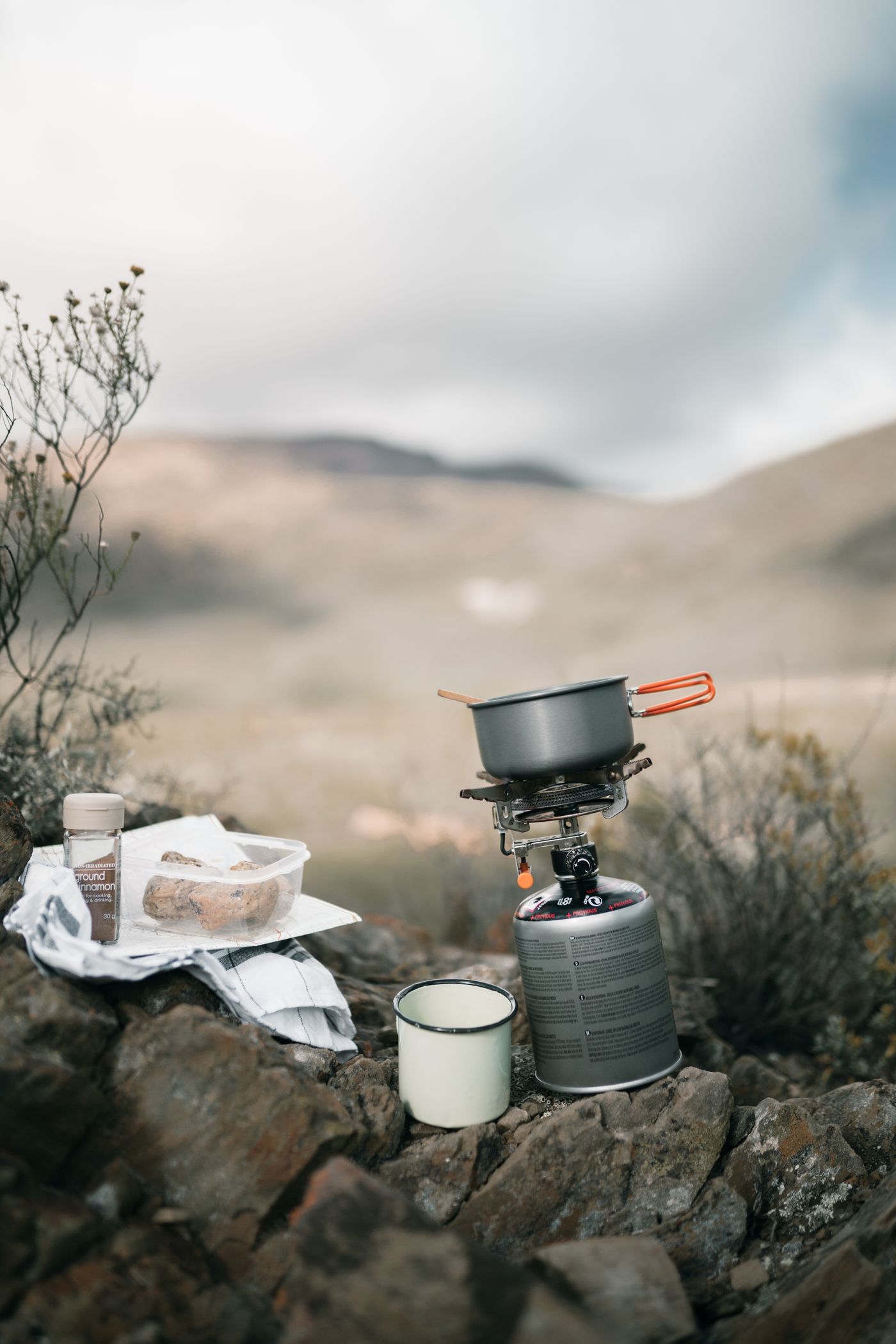
Portable camping stove with a cooking pot and mug in a mountain campsite
Compact Stove Setup Stable heat for remote meals
01 / 02
Build the Foundation

Cooking Systems

Treat your camp kitchen as a coordinated system rather than a loose collection of equipment. Each part should support the menu, group size, available transport space and expected weather.

SYSTEM 01

Heat Source

Select a stove that offers the stability and control your menu requires. A compact single burner suits simple meals, while a wider multi-burner setup supports simultaneous cooking for larger groups.

Stove Fuel
SYSTEM 02

Cookware

Choose nesting pots, pans and utensils that match your portion sizes. Flat-bottomed cookware improves stability, while fitted lids reduce boil times and protect meals from dust and debris.

Pot Pan
SYSTEM 03

Water Station

Separate drinking water from washing water and keep both away from raw-food preparation. A controlled-pour container helps reduce waste and keeps the work surface cleaner.

Drink Wash
SYSTEM 04

Food Storage

Group food by meal and temperature requirement. Keep dry goods sealed, cold ingredients insulated and scented items secured according to local wildlife guidance.

Dry Cold
Choose the Technique

Cooking Methods

The right cooking method balances flavor, preparation time, fuel use and cleanup. Build the menu around the equipment you can operate safely and consistently outdoors.

Method

Boil

Efficient for water, pasta, grains, dehydrated meals and hot drinks.

Sauté

Flexible for vegetables, eggs, proteins and fast one-pan meals.

Simmer

Best for soups, stews, sauces and slower shared meals.

Fuel Use
Low to Medium
Medium
Medium to High
Control
Simple
Active
Precise
Cleanup
Minimal
Moderate
Moderate
Best Use
Fast Starts
Fresh Meals
Group Dinners
A Clear Working Rhythm

Cooking Sequence

A repeatable sequence reduces cross-contamination, protects fuel and helps everyone in the group understand where equipment belongs.

  1. STEP 01

    Establish

    Choose a level cooking area away from tent fabric, dry vegetation and heavy foot traffic. Confirm that the stove has room for safe fuel connection and ventilation.

    Site First
  2. STEP 02

    Organize

    Place utensils, ingredients, water and waste storage in defined zones. Keep raw ingredients separate from serving tools and ready food.

    Clear Zones
  3. STEP 03

    Prepare

    Measure ingredients before lighting the stove. Open packaging, position lids and keep the next utensil within reach to avoid leaving active heat unattended.

    Before Heat
  4. STEP 04

    Cook

    Begin with moderate heat, protect the flame from wind and adjust gradually. Keep handles turned inward and maintain a clear path around the cooking surface.

    Stay Present
  5. STEP 05

    Restore

    Shut off and cool the stove, store fuel correctly, strain food particles from wash water and pack every item before leaving the site.

    Leave Clean
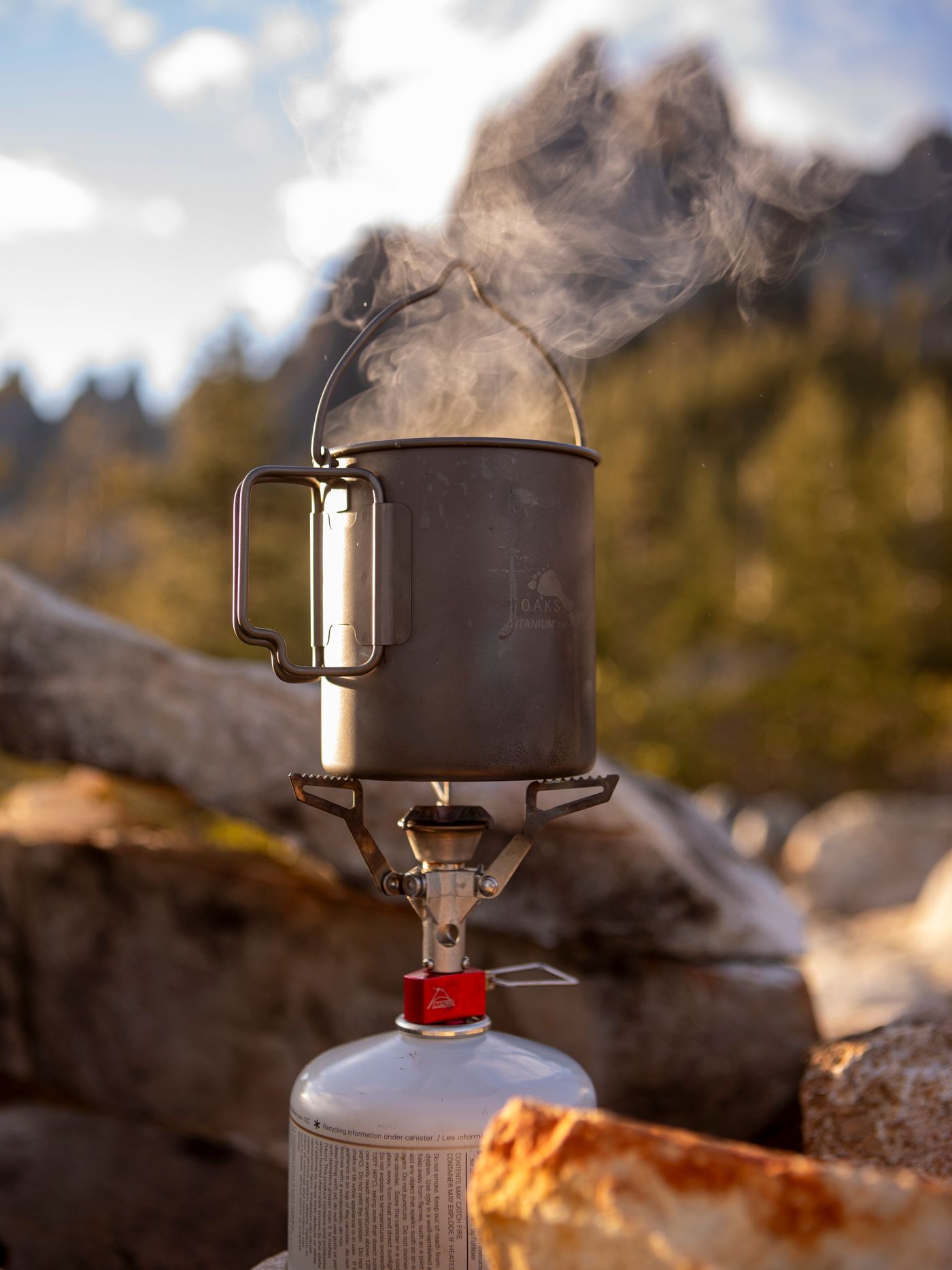
Camping stove heating a metal pot among rocks in a mountain landscape
Controlled Outdoor Heat Compact equipment, deliberate setup
02 / 02
Weather Awareness

Heat Management

Wind and temperature can change the way a stove performs. Use manufacturer-approved wind protection, maintain airflow around the fuel source and never place a stove inside a tent, vehicle or other enclosed sleeping area.

WIND Rotate the kitchen so people and equipment block foot traffic, not ventilation. Avoid improvised barriers that trap excessive heat around a fuel canister.
COLD Cold weather may reduce fuel pressure and increase boil times. Carry adequate fuel and keep meals straightforward when conditions are demanding.
RAIN Cook only beneath a shelter configuration that provides safe clearance, strong ventilation and no contact between heat, flame or hot cookware and tarp material.
HEAT Store fuel away from direct sun, hot cookware and vehicle heat. Allow equipment to cool completely before packing it into a wagon or storage container.
Menu Architecture

Field Planning

Build each day around a realistic rhythm. Reserve the most involved meal for the time when the group has daylight, energy and enough water for preparation and cleanup.

Morning Low Effort

Quick Start

Use a single pot for water, oatmeal or a simple breakfast bowl. Prepare coffee and breakfast from the same controlled heat session to reduce fuel use.

Hot Water Oats Coffee
Midday No-Cook Option

Trail Lunch

Build a meal that requires little or no cooking so the stove, fuel and cookware can remain packed during active parts of the day.

Wraps Fruit Snacks
Evening Shared Meal

Camp Dinner

Combine a one-pan main dish with a fast side. Prepare vegetables and seasoning before lighting the stove so the cooking process remains focused.

One Pan Vegetables Protein
Anytime Weather Backup

Reserve Meal

Carry one shelf-stable meal that needs only hot water or can be eaten without cooking. It protects the group when conditions make a longer cooking session impractical.

Shelf Stable Fast Reliable
Pack with Intention

Kitchen Checklist

Use this checklist as a starting framework, then adjust quantities for your group size, menu, travel method and local regulations.

Cooking 08

  • Camping stove with stable pot supports
  • Compatible fuel and a protected reserve
  • Primary ignition tool and backup matches
  • Pot with fitted lid and stable handle
  • Pan or second vessel when required
  • Heat-safe spoon, spatula and tongs
  • Manufacturer-approved wind protection
  • Heat-resistant pad or stable table surface

Preparation 08

  • Cutting board reserved for camp use
  • Sharp knife with protective cover
  • Measured spices in sealed containers
  • Reusable food storage containers
  • Cooler with adequate cold retention
  • Drinking water and washing water
  • Clean cloths and reusable towels
  • Hand-cleaning supplies near the kitchen

Cleanup 08

  • Biodegradable soap used responsibly
  • Wash basin and rinse container
  • Fine strainer for food particles
  • Dedicated waste and recycling bags
  • Container for used cooking oil
  • Paper or cloth for initial pan wiping
  • Secure storage for scented waste
  • Final site inspection before departure
Responsible Outdoor Use

Safety Standards

Equipment instructions and local regulations always take priority. Confirm current fire restrictions, approved fuel types and wildlife storage requirements before beginning a trip.

Cooking Safety

Operate in Open Air

Camping stoves produce intense heat and combustion gases. Use them outdoors in a well-ventilated area, keep children and loose fabric away, and never leave an active burner unattended.

  • Inspect connections before ignition
  • Keep fuel upright and stable
  • Turn handles away from pathways
  • Cool equipment before storage
Site Stewardship

Leave No Kitchen

Pack out food scraps, grease, packaging and wash-water particles. A clean campsite protects wildlife, reduces odors and preserves the experience for the next group.

  • Never burn packaging or food waste
  • Secure all scented materials
  • Follow local wash-water guidance
  • Inspect the ground for dropped items
The Wider Campsite

EasyRoam Ecosystem

Camp cooking works best when shelter, seating, lighting, sleep and transport systems are planned together. Every category contributes to a more organized campsite.

01

Camping Tents

Define the sleeping zone and keep cooking equipment safely outside enclosed shelter spaces.

02

Camping Tarps

Add weather protection while maintaining appropriate clearance and ventilation around heat.

03

Camping Cots

Keep the sleeping setup organized and separate from food storage, fuel and cookware.

04

Sleeping Bags

Support dependable rest after long days of travel, preparation and outdoor activity.

05

Camping Pillows

Add compact comfort without taking unnecessary space from kitchen and food storage.

06

Camping Chairs

Create a comfortable dining area positioned outside the active cooking and fuel zone.

07

Camping Wagons

Move cookware, water, ingredients and cleanup supplies in a more controlled load.

08

Camping Stoves

Deliver controlled outdoor heat for hot water, simple breakfasts and complete evening meals.

09

Camping Lanterns

Illuminate the preparation and cleanup area without placing loose lights beside active heat.

EasyRoam Field Note

The best camp meal is not the most complicated. It is the one prepared with calm systems, reliable equipment and enough time to enjoy the place around you.

Build the kitchen before hunger sets the pace. Organize every tool, protect every resource and finish with a campsite that looks ready for the next adventure.

Cook Well Outdoors
Field Answers

Common Questions

Practical answers for building a safer and more efficient camp cooking routine. All questions remain closed until selected.

How much fuel should I bring for a camping trip?
Fuel needs depend on stove type, group size, elevation, air temperature, wind and menu complexity. Estimate the number of boils and cooking sessions, check the stove manufacturer’s guidance and carry a sensible reserve rather than relying on one partially used canister.
Can a camping stove be used inside a tent?
Camping stoves should not be operated inside tents, vehicles, sleeping shelters or other enclosed areas. Combustion creates dangerous gases and the heat can ignite nearby fabric. Use the stove outdoors with clear ventilation and safe separation from shelter materials.
What cookware is best for a compact camp kitchen?
Select cookware with a flat base, stable handles and a diameter appropriate for the stove supports. Nesting pots save space, while fitted lids reduce heat loss. Choose the smallest set that can prepare your planned portions without overcrowding.
How should food be organized at the campsite?
Group ingredients by meal, separate raw foods from ready-to-eat items and protect temperature-sensitive ingredients in a suitable cooler. Store scented food, waste and toiletries according to the wildlife rules for the area.
How can I reduce water use during cleanup?
Wipe cookware before washing, choose one-pot meals, use a small controlled-pour container and strain food particles from wash water. Follow local guidance for disposing of wash water and pack out all captured food residue.
What should I do when strong wind affects the stove?
Move to a safer position when possible and use only wind protection approved for the stove. Do not enclose the fuel canister or create a barrier that reflects excessive heat toward it. If a stable flame cannot be maintained safely, stop cooking and use the backup meal.
When should the camp kitchen be packed away?
Clean and secure the kitchen after the final meal of the day. Allow the stove and cookware to cool completely, disconnect fuel as directed, remove food scraps and store scented items before leaving the area or going to sleep.
Prepare with Confidence

Ready for Camp

Start with the cooking system, confirm the checklist and build a campsite where every item has a clear purpose.